The big picture
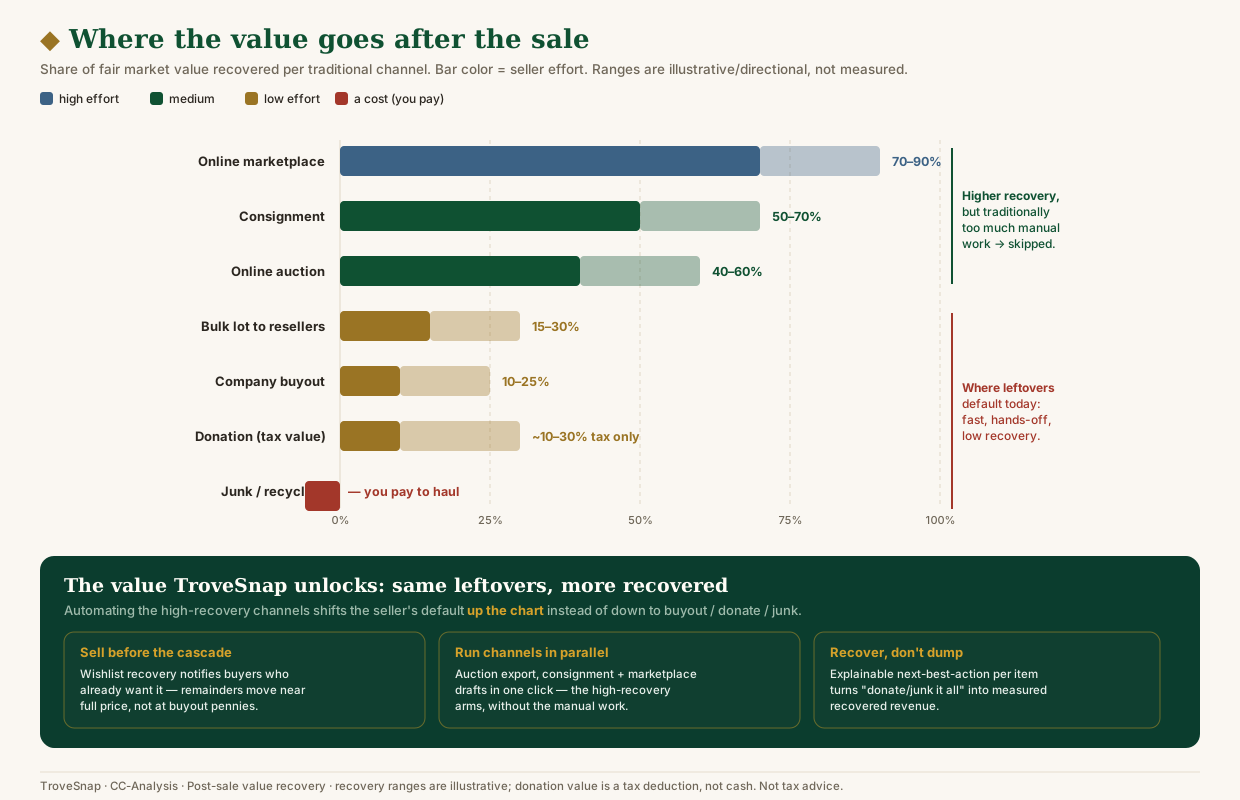
Post-sale disposition is a fragmented, mostly-manual cascade that runs in sequence, leaks value at every step, and relies on the liquidator's personal rolodex rather than data. Sellers default down the cascade — to the fast, low-recovery channels (buyout, donate, junk) — precisely because the high-recovery channels (marketplace, consignment, auction, demand-matching) are too much manual work. That default is the value TroveSnap can recover.
0 · It starts in the contract
Reputable liquidators settle the leftover question up front. Commission runs 25–50%. Some bundle a post-sale "sweep" into commission; others charge a separate cleanout fee. Agreed options: return to family, donate, dispose, or buyout.
1 · Markdown to clear during the sale
Standard schedule: day 1 full price → day 2 ~25% off → day 3 50% off, with last-hours "fill-a-bag for $10" dumps for small goods. High-value categories (jewelry, art, precious metals) cap tighter (~25%) to protect value. Day 3 is about volume, not margin.
2–11 · The post-sale cascade (high recovery → low)
| # | Channel | Who | Recovery (illustrative) | Effort | Notes |
|---|---|---|---|---|---|
| 2 | Return to family / heirs | family | n/a | low | cherry-pick back first |
| 3 | Online marketplace (eBay/FB/Craigslist) | company or family | 70–90% FMV | high | best recovery, most labor, per-item |
| 4 | Consignment shop / auction | consignor | 50–70% | med | recovers over time, minus commission |
| 5 | Online auction of remainders | auction house / MaxSold-style | 40–60% | med | fast, 2–6 hr bidding |
| 6 | Bulk lot to resellers / pickers / dealers | liquidator's network | 15–30% | low | lump sum, hauled away; rolodex-driven |
| 7 | Company / third-party buyout | buyout service | 10–25% | very low | one lump sum, fast, lowball |
| 8 | Donation (Goodwill, Salvation Army, Habitat ReStore) | charity | tax value only (~10–30%) | low | most common end state; tax deduction below |
| 9 | Junk removal / estate cleanout | 1-800-GOT-JUNK, College Hunks, Junkluggers, 123Junk | negative (a cost) | none | "broom-clean"; donate→recycle→landfill |
| 10 | Recycling: e-waste / scrap / textiles | R2/SERI recyclers, scrap, Thrifty Rags | n/a | none | the non-sellable tail; ESG story |
| 11 | Free / storage / left in place | Buy Nothing, Freecycle, storage unit | n/a | varies | long tail; storage = deferred decision |
Donation tax mechanics (the under-used benefit)
- IRS Form 8283 required when total noncash donations exceed $500.
- Section A for items/groups ≤ $5,000; Section B + a qualified appraisal (signed ≤60 days before donation) for any item/group over $5,000.
- Deduction is at fair market value (thrift-shop value / comparable sales), per IRS Pub 561; the charity's receipt acknowledges receipt, not value.
How it maps to TroveSnap — and the gaps
Already covered by disposition-engine.md ("What's Next"): republish, auction
candidate, make-offer, clearance, donation manifest, consignment, archive, the wishlist-recovery
differentiator (re-match unsold to live buyer demand), and the auction export CSV. The demand
graph is the data version of the liquidator's rolodex.
Gaps worth closing:
- Tax-ready donation manifest — make the manifest Form 8283 / Pub 561-aware (per-item FMV, the $500 / $5,000 thresholds, an appraisal flag > $5k). Turns a chore into a seller benefit; reuses the existing pricing-guidance/appraisal engine.
- Junk-removal & recycling handoff — the cascade's bottom (cleanout, e-waste R2/SERI, scrap, textile recycling) has no home in the disposition engine. A "responsible disposal" terminal stage with vendor handoff completes the lifecycle and carries an ESG/trust story.
- Reseller/picker buyout as a marketplace — the biggest manual, relationship-driven channel (#6). A "bulk-lot offer to vetted resellers" surface productizes the rolodex (adjacent to the deferred Estate-Sale-Leftovers buyer surface).
- Parallel, not sequential — traditionally these run one-after-another; TroveSnap's edge is running the high-recovery arms in parallel with explainable, demand-driven recommendations. That shift — default up the chart, not down — is the recovered-revenue story (see infographic).
Sources
- Blue Moon, One White Orchid, estatesales.org (post-sale procedures, pricing, discount structuring), San Diego Estate Services, Jerry's Antiques, The Perfect Piece — leftover handling & cascade.
- Junk.com, 123JUNK, Spartan Junk, 1-800-GOT-JUNK, Junkluggers — cleanout / haul-away.
- US EPA, Goodwill (Thrifty Rags) — e-waste / textile recycling.
- IRS Form 8283 instructions & Pub 561 — donation tax mechanics.
- Apartment Therapy, Curio — discount-day timing.
Recovery ranges illustrative; donation value is a tax deduction, not cash. Not tax advice — add a disclaimer wherever these surface to sellers.