How estate sales track sales today (the gap)
- Manual (most small/solo sales): handwritten/printed price stickers, color-coded tags, checkout = calculator + cash box; cards via Square "quick amount" (a dollar figure, not an item). Result: no item-level sold data — the day's total, not which items sold.
- Square (~54% of EstateSales.NET sellers): dominant card processing, quick-add at checkout; rarely linked back to inventory.
- Estate-sale POS (PROSALE, EstateSail): real item-level — print price+barcode+description labels, scan at checkout, image-verify, integrated payments. The minority, gated by cost/learning curve.
- Auctions: lot numbers + barcodes + clerking → full item-level sold data (the gold standard the floor lacks).
- QR price stickers already exist (Scanlily, branded tags) — validated but fragmented, not tied to a demand/marketplace pipeline.
The recurring gap: the in-person floor produces no itemized sold/unsold truth, so TroveSnap reconstructs it later from messy CSVs. QR-at-checkout fixes that.
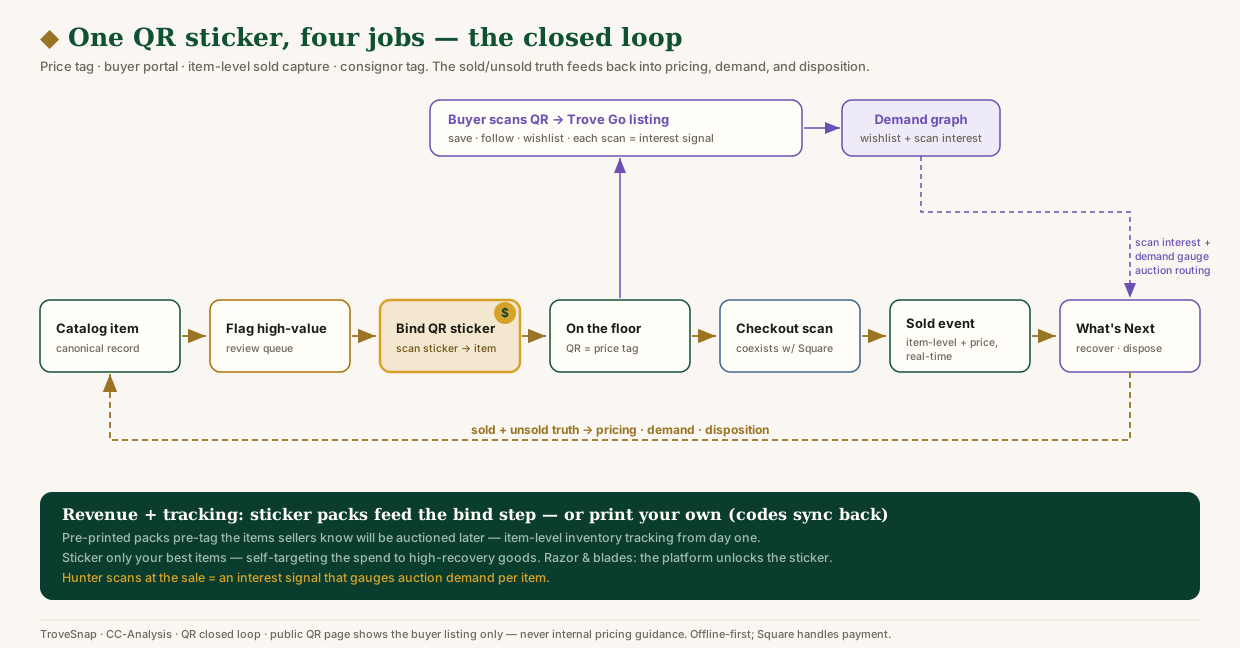
The closed loop (one sticker, four jobs)
A QR sticker bound to TroveSnap's existing item record is simultaneously:
- Price tag on the floor.
- Buyer portal — QR → the public item/sale page (not the seller's profile, though it links back there). Save/follow/wishlist feeds the demand graph; physical stickers become buyer acquisition. A shopper can "notify me" to watch the item and get pinged when it hits the next discount phase (day-2/day-3 markdowns), or make an offer on the spot — so lingering, marked-down inventory keeps moving. (Reuses
discount_phases,buyer_offers, alerts.) - Item-level sold capture — scan at checkout writes the sold event + final price to
inventory_status_eventsin real time, eliminating CSV reconciliation and completing the pipeline's inbound half. - Consignor tag — binds the item to the right family/consignor → automatic commission split & settlement.
The sold/unsold truth then loops back into pricing, demand, and disposition (auction export, wishlist recovery), and makes the live dashboard genuinely live.
Sticker-pack monetization (sellable consumable)
- Razor & blades: the stickers are the consumable, the platform is the value. Pre-printed packs (no printer required) carry blank unique codes that bind to an item on first scan.
- Selective use is a feature: sellers sticker only their most auctionable items, self-targeting spend to high-recovery goods — exactly the items worth item-level tracking, appraisal flags, buyer portals, and auction routing. Cheap/bulk stays manual.
- The app drives the sale: the review queue already flags
appraisal_recommendedhigh-value items — it can prompt "sticker these 18 flagged items," turning a flag into a pack sale. - Every sticker is distribution: branded QR labels at every sale are "scan → Trove Go" billboards in front of the exact buyers to acquire.
Two ways to get labels (both sync)
- Pre-printed sticker packs — the sellable consumable; no printer required. Their real job beyond convenience: pre-tag the items a seller already knows can be auctioned later, giving item-level inventory tracking from day one for future auction candidates (feeds straight into the auction-outbound pipeline).
- Print-your-own — generate QR labels from the canonical record and print on a standard/label printer. Either way the codes synchronize: self-printed codes register to the account exactly like pack codes, so binding, sold-capture, and analytics work identically. Pre-printed = blank codes that bind on first scan; print-your-own = codes minted from the record at print time.
Scan-interest metrics (gauging auction demand)
Every buyer/hunter scan of a QR at the sale is a lightweight interest signal. Aggregated per item, scan counts become an auction-demand gauge — the items hunters keep scanning are the ones with real pull, exactly the signal a seller wants when deciding what to route to auction vs. clearance vs. donation. Scans feed the demand graph alongside wishlist matches and surface as a per-item interest metric on the live dashboard and in What's Next recommendations. No login required to scan; counts are anonymous interest, not buyer identity.
Pricing notes (proposed SKU for pricing-and-tokens.md)
- QR sticker packs — the only physical SKU. Gateway-priced (margin secondary; value is platform usage + buyer acquisition).
- SKUs: standard label, weatherproof (outdoor/yard), hang-tag (antiques/fragile/no-stick). Pack sizes (e.g., 50 / 100 / 250).
- Plan allotments: Estate includes N/mo, Pro more; overflow via packs (nudges upgrades).
- Fulfillment: print-on-demand / dropship — no held stock.
Caveats → design resolutions
1 · Binding flow must be ~5s; offline-first
2 · Adhesive / durability
3 · Checkout speed (beat a calculator; coexist with Square; optional)
4 · Privacy
5 · Physical ops (shipping / SKUs / returns)
6 · Existing players (PROSALE / Scanlily)
Pipeline integration & phasing
- Now (deterministic, no Auth): generate/print QR labels from existing records; public QR → buyer listing.
- Phase 2 (Auth + connectors): checkout-scan PWA (offline-first) writing item-level sold events; consignor binding + settlement; live-dashboard streaming.
- Bridge, not rebuild: payment stays on Square; TroveSnap reconciles item ↔ money. Consistent with the no-payments core stance.
Sources
- EstateSales.NET (POS, ~54% Square), PROSALE, EstateSail — POS & item-level tracking.
- OpenLabelMaker, Amazon/Etsy tag listings — color/numbered/barcoded estate tags.
- Sortly (QR vs barcode), Scanlily — QR inventory for estate sales.
Pricing/SKU sketch is a proposal for docs/product/pricing-and-tokens.md, kept here to avoid editing the canonical doc. Surface no internal pricing on the public QR.